
122+ Workbench Plans Free

 www.homedepot.com ```html
 Ready to tackle those DIY projects with more ease and efficiency? A sturdy workbench is the cornerstone of any well-equipped workshop. This guide will walk you through the process of building your own robust and customizable workbench, perfect for a variety of tasks. Get ready to create a workspace tailored to your specific needs!
Before you start cutting wood, a little planning goes a long way. Consider the size of your workspace and the types of projects you'll be working on. Draw a simple sketch of your desired workbench, including dimensions. This will help you determine the necessary materials.
- Lumber: Decide on the type of wood. Pine is a budget-friendly option, while hardwood like maple or oak offers greater durability. Consider the thickness of the wood for the legs, frame, and top.
- Fasteners: Stock up on screws, nails, and wood glue. Ensure you have the right size and type for the wood you're using.
- Tools: Gather essential tools such as a saw (circular saw, miter saw, or hand saw), drill/driver, measuring tape, level, square, sandpaper, safety glasses, and ear protection. A workbench with drawers or cabinets requires additional hardware (drawer slides, hinges, handles).
With your plan and materials ready, it's time to cut the lumber according to your dimensions. Accuracy is key to a square and stable workbench.
- Carefully measure and mark each piece of wood before cutting.
- Use the appropriate saw to cut the lumber. For straight cuts, a circular saw or miter saw is ideal.
- Double-check the measurements after each cut to ensure accuracy.
- Sand the edges of the cut pieces to remove any splinters and create a smooth surface.
The frame provides the structural support for the workbench. It's crucial to assemble it securely and squarely.
- Assemble the legs of the workbench first. You can use wood glue and screws to join the leg pieces together. Ensure the legs are square and stable.
- Attach the horizontal frame pieces (aprons) to the legs, creating a rectangular frame. Use wood glue and screws to secure the aprons to the legs.
- Reinforce the corners of the frame with corner braces or gussets for added stability.
The workbench top is the primary work surface. It needs to be strong, flat, and durable.
- If you're using multiple pieces of lumber for the top, glue and clamp them together. Allow the glue to dry completely before proceeding.
- Once the glue is dry, sand the top smooth. Start with a coarse grit sandpaper and gradually move to finer grits.
- Attach the workbench top to the frame using screws. Make sure the screws are long enough to penetrate the frame securely, but not so long that they poke through the bottom.
Customize your workbench with additional features to enhance its functionality.
- Adding a Vise: Install a woodworking vise to hold workpieces securely.
- Installing Drawers or Cabinets: Add drawers or cabinets for storage.
- Adding a Tool Rack: Install a tool rack to keep your tools organized and within easy reach.
- Applying a Finish: Apply a finish to protect the workbench from moisture and wear. Consider using polyurethane, varnish, or oil-based finish.
You Might Also Like: 73 Flat Roof Hidden Roof Design
Congratulations! You've successfully built your own workbench. This custom-made workspace will provide a solid foundation for countless future projects. Remember to maintain your workbench and adjust it over time to meet your evolving needs. Enjoy your new creative space!
Husky 4 Ft. Solid Wood Top Workbench With Storage-g4801s-us
www.homedepot.com Heavy-duty Plank Workbench
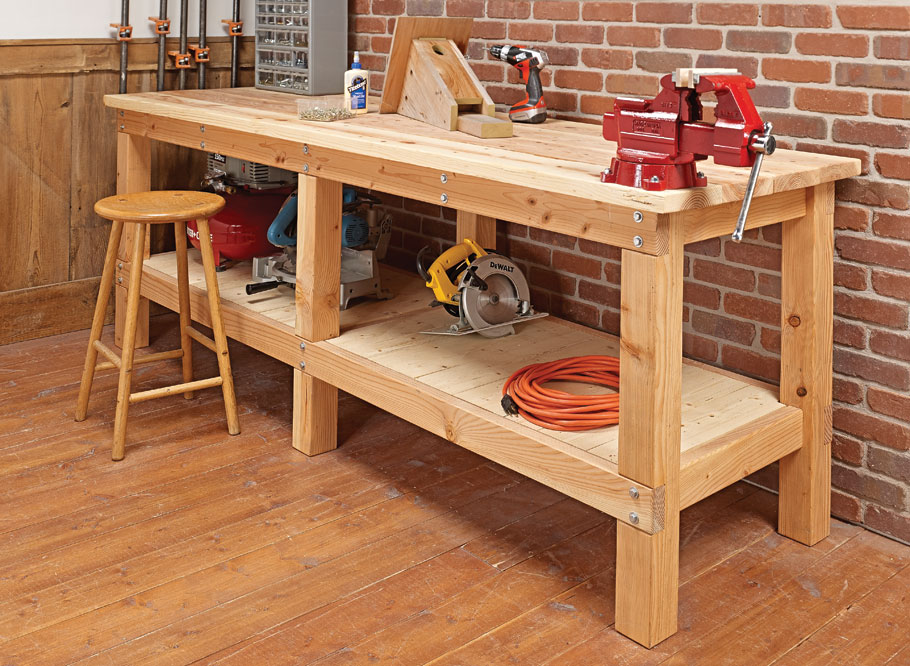 www.woodsmithplans.com
 Workpro 2-in-1 48-inch Workbench And Cabinet Combo With Light, Steel, Wood
 www.pinterest.com


0 komentar:
Posting Komentar